













Green Tea vs Black Tea: How They Compare
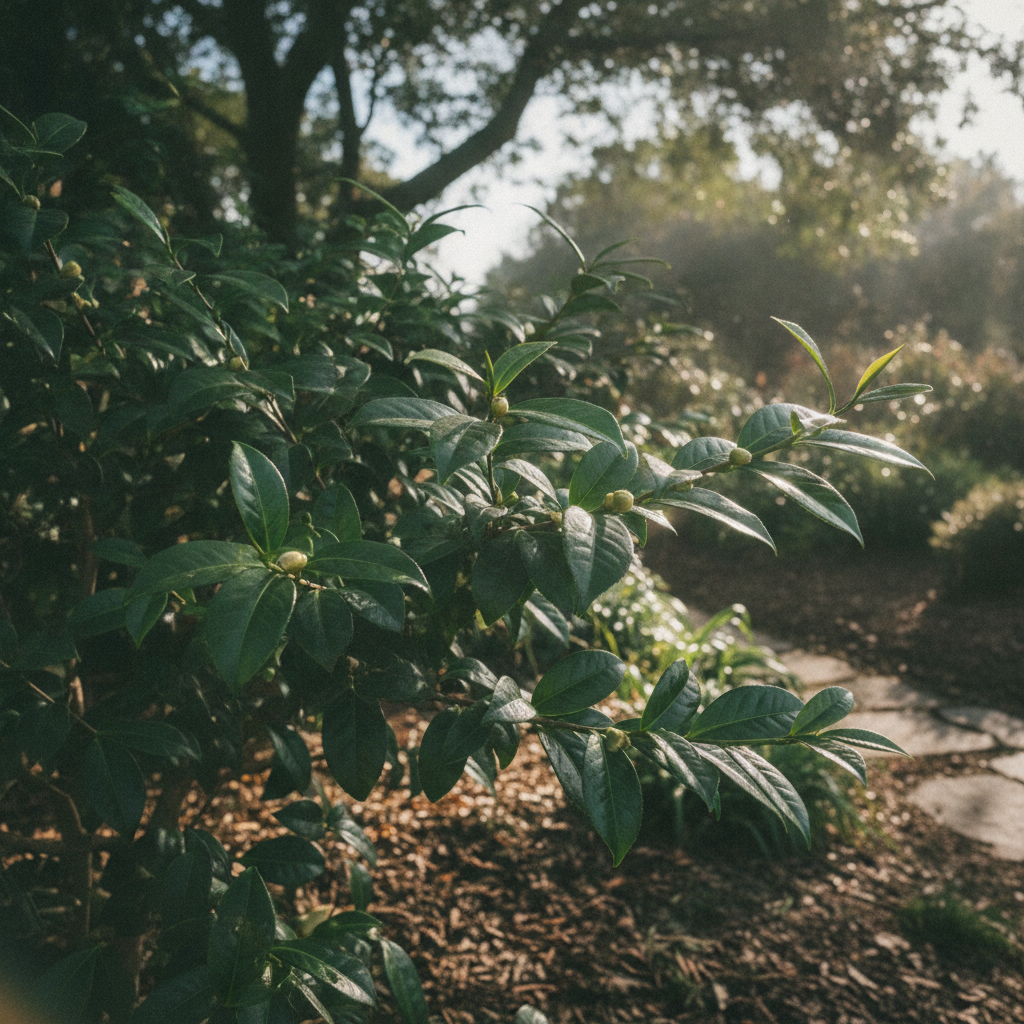
Green tea and black tea come from the same plant, Camellia sinensis. The difference between them is entirely in the processing - specifically, whether the leaf is allowed to oxidise. That single decision changes the flavour, the chemistry, the colour in the cup, and the character of what you're drinking.
Processing: Where Green and Black Tea Diverge
After picking, tea leaves begin to oxidise immediately. Enzymes in the leaf react with oxygen and start breaking down chlorophyll and other compounds. Green tea producers stop this process quickly, usually within hours, by applying heat. In China this is done by pan-firing the leaves in a wok or rotating drum (called "kill-green" or shaqing). In Japan the standard method is steaming, which gives Japanese green teas a distinctly different character from their Chinese counterparts. Some Korean producers use both methods depending on the style.
For black tea, oxidation is encouraged and completed. After picking, the leaves are withered to reduce moisture, then rolled or cut to break cell walls and expose the leaf to air. The oxidation period runs anywhere from 30 minutes to several hours depending on the style. When the producer judges oxidation complete, the leaves are fired to halt the process and lock in the flavour. This full oxidation is what turns the leaf dark brown and creates the compounds responsible for black tea's characteristic flavour profile.
Keemun, Lapsang Souchong, and Tieguanyin are good starting points for exploring the range within each category.
Flavour: What to Expect in the Cup
Green tea flavour ranges from fresh and grassy to rich and umami-laden, depending heavily on origin and processing method. Chinese pan-fired greens tend toward nutty, toasty, or sweet profiles. Japanese steamed greens lean into marine, vegetal, and umami notes. Some green teas taste like fresh cut grass; others are more reminiscent of roasted nuts or spring peas.
Black tea flavour is equally varied. A first flush Darjeeling has floral, muscatel notes and a light body that bears little resemblance to a malty Assam garden tea. A Yunnan Dianhong brings sweet cocoa and red fruit. A Keemun from Anhui province has a wine-like, slightly smoky depth. What these teas share is a fuller, rounder quality that comes from the completed oxidation - the fresh green character is gone, replaced by the compounds produced during the oxidation process itself.
Neither category is inherently more complex than the other. Both reward attention and good sourcing equally.
Aroma and Appearance
The dry leaf tells you a lot before you ever add water. Green tea leaves retain their natural colour, ranging from pale jade to deep forest green, sometimes with silver tips or a slight bloom from pan-firing. Japanese greens like Gyokuro have flat, needle-like leaves with an intensely green, almost powdery appearance. Chinese greens can be twisted, balled, or flat depending on the style. Longjing leaves are famously pressed flat, while Bi Luo Chun is rolled into tight spirals.
Black tea dry leaf runs from golden to dark brown or black. Whole leaf teas show the structure of the leaf clearly. Darjeeling first flush often has visible silver tips and a silvery bloom. Dianhong from Yunnan is famous for its golden tips, leaves covered with fine golden down, which signal high quality and a particular sweetness in the cup.
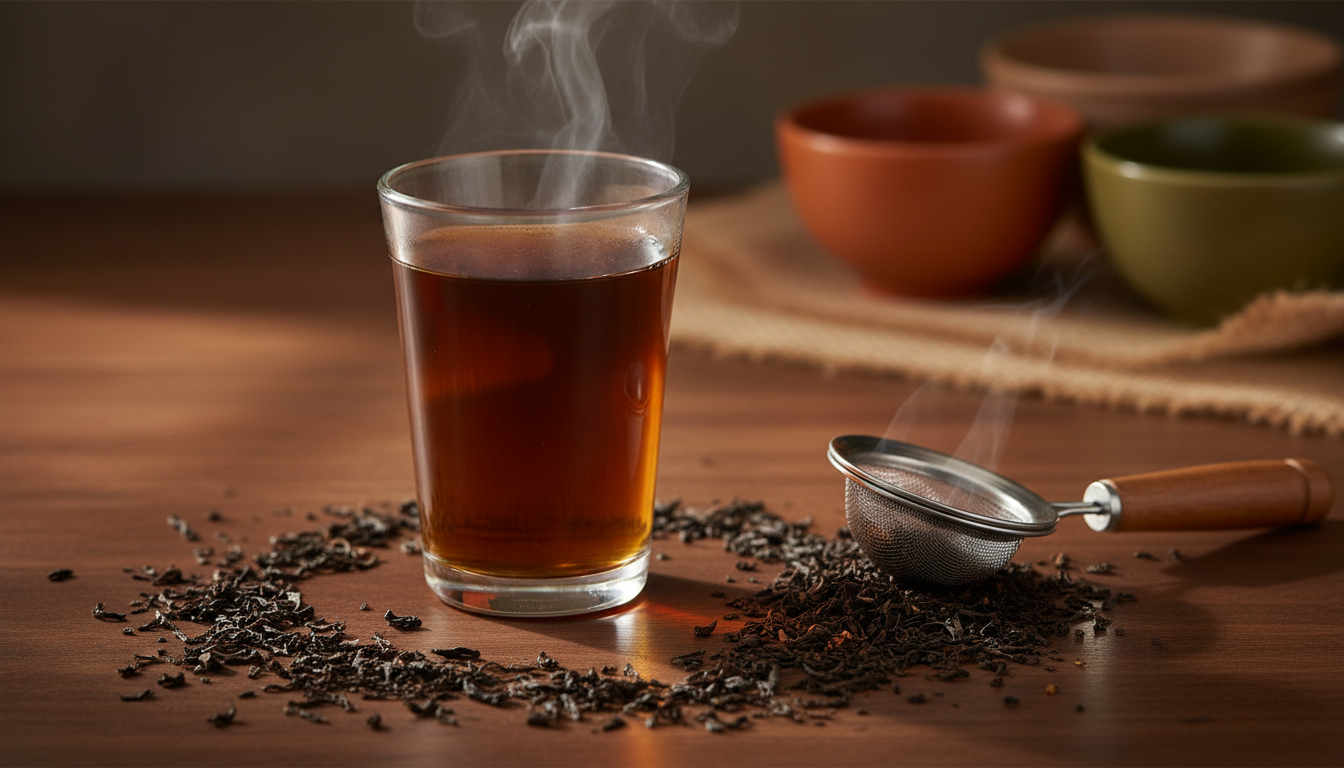
In the cup, the colours are immediately distinct. Green tea brews to pale yellow, pale green, or light gold depending on origin and steeping time. Japanese greens, especially Gyokuro, can turn a vivid grassy green. Black tea brews to amber, copper, or deep mahogany. The same Darjeeling garden produces a pale amber first flush and a darker amber second flush, with the difference visible at a glance.
Wet leaf aroma after steeping is worth paying attention to. Green tea wet leaves smell fresh and alive. Steamed teas smell almost oceanic, pan-fired teas smell toasty or floral. Black tea wet leaves develop richer, more complex aromas: stone fruit, honey, cocoa, or the distinctive muscatel grape of a good Darjeeling.
Opening the lid of the teapot after steeping and taking a moment with the aroma is not pretentious. It is information.
Antioxidants and Compounds
The chemistry of green and black tea differs significantly because of oxidation. Green tea retains high levels of catechins, a class of polyphenol antioxidant. The most studied is EGCG (epigallocatechin gallate), which is abundant in green tea and largely absent in black. Catechins are the dominant antioxidant compounds in unoxidised or lightly oxidised teas.
During black tea oxidation, catechins convert into different compounds: theaflavins and thearubigins. Theaflavins are the brighter orange-yellow compounds responsible for the brightness in black tea liquor. Thearubigins are the larger, more complex polymers that give black tea its deep colour and body. Both are antioxidant compounds in their own right, just different ones from those found in green tea.
L-theanine, the amino acid responsible for the calm focus associated with tea drinking, is present in both. Shade-grown teas, whether green (Gyokuro, matcha) or occasionally shade-processed blacks, tend to have higher L-theanine levels because shading increases L-theanine levels because the plant produces more of it in response to reduced sunlight. This is why shade grown teas often feel particularly smooth and centred to drink.
Neither category has a monopoly on beneficial compounds. They simply have different ones.
Caffeine
Both green and black tea contain caffeine, and the variation within each category is larger than the average difference between them. You can read the full breakdown in our guide to caffeine in tea, but the short version: caffeine levels depend on the part of the plant used (buds and young leaves have more caffeine), the growing conditions, and how long you steep. A strongly brewed Gyokuro can have more caffeine than a lightly brewed Darjeeling. Processing type is one factor among several, not the determining one.
For those sensitive to caffeine, neither category is automatically safe or unsafe. Shade-grown teas deserve particular mention here: the shading that increases L-theanine also tends to increase caffeine because the plant produces caffeine partly as a defence mechanism, and shaded leaves compensate for less photosynthesis by concentrating more metabolites. The calmer feeling from shade-grown teas like Gyokuro comes from the interaction between higher L-theanine and higher caffeine, not from lower caffeine overall.
Origin: The Range Within Each Category
Green tea is not a Japanese product, though Japan has done the most to shape its global image. We source green teas from China, Japan, and Korea, each with distinct styles that bear little resemblance to each other.
From China: Longjing (Dragon Well) from Hangzhou is one of the most recognised green teas in the world. It is flat pressed, pan-fired, with a chestnut and sweet grass character. Bi Luo Chun from Suzhou is tightly rolled, intensely aromatic, with a fruity floral quality that's quite different from the more restrained Longjing. Gunpowder green, named for its tightly rolled pellets, brews strong and slightly smoky. It is the base for traditional Moroccan mint tea and has its own robust character worth exploring on its own terms. Anji Bai Cha, despite the name, is a green tea with remarkably pale leaves and a sweet, almost creamy flavour caused by a genetic mutation that reduces chlorophyll production in early spring.
From Japan: Sencha is the workhorse of Japanese green tea. It is steamed to varying degrees (light, standard, or deep/fukamushi), producing a grassy, sometimes oceanic flavour depending on the region and producer. Gyokuro is shade grown for 20 days before picking, which concentrates L-theanine and gives the tea a distinctive umami sweetness that is unlike anything else. The best Gyokuro from Uji or Yame is brewed at very low temperatures (around 50°C) with a small amount of leaf and produces a thick, intensely savoury liquor.
From Korea: Korean green teas remain less well known globally but are worth exploring. Sejak (second flush) and Ujeon (pre-rain, earliest harvest) from the Boseong or Hadong regions have a character that sits between Chinese and Japanese styles. They are less marine than Japanese steamed teas, more rounded than most Chinese pan-fired greens. They are produced with centuries of their own tradition and technique.
For black tea, the range is equally wide. India produces the two most famous: Darjeeling from the foothills of the Himalayas, where high altitude and specific cultivars produce the muscatel character that defines a good second flush, and Assam from the lowland river valley, where the larger-leafed Assam cultivar produces the malty, full-bodied teas suited to those who want weight and intensity. A single-garden Assam from a quality estate has nothing in common with mass-market Assam blended for tea bags. They share a name and little else.
China produces black teas of a completely different character. Keemun from Anhui province has a wine-like, slightly smoky depth and a particular flavour note the English called "Burgundy." It was once the base for English Breakfast blends before Indian teas took over that role commercially. Dianhong from Yunnan uses large-leafed trees related to the same cultivars used for pu-erh, producing a black tea with cocoa, red fruit, and honey notes. The golden-tipped versions show a sweetness and complexity that tends to surprise people expecting a standard black tea character.
Brewing: Getting the Most from Each
Green tea is more sensitive to water temperature. Most green teas, especially Japanese varieties, perform best between 70-80°C. Higher temperatures can turn the flavour bitter and harsh, masking the delicacy that makes good green tea worth drinking. For Gyokuro specifically, 50-60°C is not unusual. Chinese green teas are sometimes more forgiving, particularly pan-fired styles, but starting at 80°C and adjusting is a reasonable default. Steeping time for most green teas runs 1-3 minutes depending on the style and temperature.
Black tea generally brews well at 90-100°C. A light first flush Darjeeling is an exception. Some tea drinkers prefer 85-90°C to preserve the floral top notes. For most black teas, a full rolling boil is fine. Steeping time is typically 2-4 minutes. Over-steeping makes black tea bitter, not just strong. If you want more intensity, use more leaf rather than extending the steep.
Both categories benefit from good water. Heavily chlorinated tap water genuinely degrades the flavour of quality loose leaf tea. Filtered water or low-mineral spring water is worth using when you have paid for good leaves.
Read more about the fundamentals in our guide to green tea.
Multiple Infusions
One practical difference that rarely gets discussed: how each category handles re-steeping.
Quality green teas, particularly Chinese styles like Longjing and Bi Luo Chun, and Japanese Gyokuro, are well suited to multiple infusions. The first steep extracts the initial bright flavours; subsequent steeps reveal different aspects of the leaf. With Gyokuro you might get three to four very different cups from the same leaves. The first steep is intensely umami; later steeps often taste sweeter and lighter. With gongfu-style brewing using small vessels and short infusions, Chinese green teas can yield six or more infusions, each distinct.
Black teas are generally more one-and-done when brewed Western style (larger volume, 3-4 minute steep). The full extraction in a single steep leaves less complexity to develop in subsequent infusions. That said, high-quality whole-leaf black teas brewed gongfu-style with short infusions do re-steep reasonably well. A good Dianhong or Keemun can give two or three satisfying infusions this way. The character will shift and lighten, but it does not simply become weak and flat as with mass-market tea.
If you want to maximise the value of your leaf and enjoy exploring how a tea develops, green teas, particularly high-quality Chinese greens, offer more to work with across multiple infusions.
Storage and Shelf Life
Green tea is perishable in a way that black tea is not. The compounds that give green tea its fresh, grassy, vegetal character are volatile and degrade with exposure to air, light, heat, and moisture. A green tea that was brilliant in spring can taste flat and papery by autumn if stored poorly. Some Japanese producers vacuum-seal their green teas specifically to slow this degradation, and it works. Vacuum-sealed Shincha can keep its freshness for months. Once opened, those teas need to be consumed within a few weeks at most.
The general advice for green tea storage: airtight container, away from light, away from heat sources, and away from strong-smelling foods. Tea is hygroscopic and odour-absorbent. It will take on the smell of whatever is near it. A dedicated tin in a cool cupboard is sufficient. The fridge is sometimes recommended for green tea, but the moisture risk from condensation when taking the container in and out repeatedly tends to cause more problems than it solves unless you are storing sealed packages you will not open for months.
Black tea is more stable. The oxidation process has already done its work; there is no "fresh" character to lose in the same way. A good black tea stored in an airtight tin will hold its flavour for two years without significant deterioration. It will not improve indefinitely with age like a well-stored pu-erh, but it holds. This makes black tea more forgiving to buy in larger quantities. The main enemy remains moisture and strong odours. The airtight tin principle applies to both.
One practical note: if you are not sure how old a green tea is or how it has been stored, brew a cup before committing to it for guests. Aged green tea is not harmful, but it is often disappointing. It is flat, papery, and a poor advertisement for what the tea can actually taste like.
Milk and Sweetener
The convention of adding milk to tea developed primarily with blended CTC (cut-tear-curl) black teas produced for mass consumption. These teas are deliberately made strong, malty, and resilient to dilution with milk and sugar. It makes sense for that product. It does not make sense for a Darjeeling first flush, a Dianhong, or any green tea.
Some people add milk to lower-grade black teas to soften the bitter edge from over-extraction or lower-quality leaf. With quality loose leaf black tea brewed correctly, that edge is not there to soften. The milk covers the very flavours that make good black tea worth drinking.
Green tea with milk is not a traditional combination in any producing country. The delicate flavours of green tea are simply overwhelmed. If you want a milky tea preparation, a strongly brewed black tea, chai, or a Japanese matcha latte (which is its own thing) are better starting points.
Which Should You Choose?
The honest answer is that "green vs black" is not the useful question. Within each category the variation is so large that choosing between categories tells you much less than choosing within them.
If you want something fresh, light, and grassy in the cup, a Japanese Sencha or a Chinese Longjing may appeal. If you want something umami and rich, Gyokuro is in its own category. If you want floral complexity with light body, a Darjeeling first flush is the direction to explore. If you want bold, full-bodied, and malty, an Assam single-garden tea delivers that. If you want wine-like depth, Keemun or a good second-flush Darjeeling. If you want sweet cocoa and red fruit, Dianhong.
The most useful thing you can do is try teas from multiple origins in both categories and notice what you actually enjoy, as opposed to what you expect to enjoy based on category reputation. Some confirmed green-tea drinkers discover they love a well-made Keemun. Some longtime black tea drinkers find Gyokuro becomes their reference point for everything. The categories are a starting point, not a destination.
Both green and black teas deserve the same quality of sourcing, brewing attention, and open curiosity. The plant is the same. The differences are human decisions, applied with more or less care and craft.
Leave a comment
Comments will be approved before showing up.
Also in Valley of Tea Blog | Tea Guides, Origins & Brewing Tips
The Complete Guide to Drinking Tea
What tea is, how the main types differ in the cup, and how to brew each one properly. Water temperature, steeping times, storage and how to get more than one cup from your leaves.
Read More

Black Tea: Types, Processing, and How to Brew It
Black tea is fully oxidized Camellia sinensis. Compare Assam, Darjeeling, Keemun, and Ceylon varieties. Learn processing, brewing, and caffeine levels.

How To Grow Black Tea
Learn how to grow black tea at home: soil, climate, and the five processing steps from fresh leaf to a finished cup of black tea.

Wisdom is the path to better tea.
Get our free brewing guide: the right water, heat and timing for every tea we sell. You will also hear it first when new harvests arrive.
No spam. Unsubscribe any time.
Check your inbox.
The guide is on its way.